
Sex Offender Checks in Gray County
The Texas Public Sex Offender Registry is the main public search for Gray County. Texas DPS operates the free statewide system. It supports both person-based and place-based questions, so a reader can search a known name or review records tied to a city, ZIP code, county, address, or available radius. Selecting Gray County matters because a Pampa-only query can leave out registrations maintained for rural addresses.
Local law enforcement supplies and verifies registration data. A city police authority handles a person who resides inside its jurisdiction, while the Gray County Sheriff handles county-area registrations outside a city. The City of Pampa portal and City of Lefors portal provide official city routing when a profile names one of those local authorities. The profile itself identifies the registering agency. That field is the best clue if an entry seems stale. Gray County does not publish a separate county registry map or alert service, so the DPS record remains the first public layer.
The official registry interface shows the controls Gray County readers must use. The image below comes from the Texas DPS registry search.
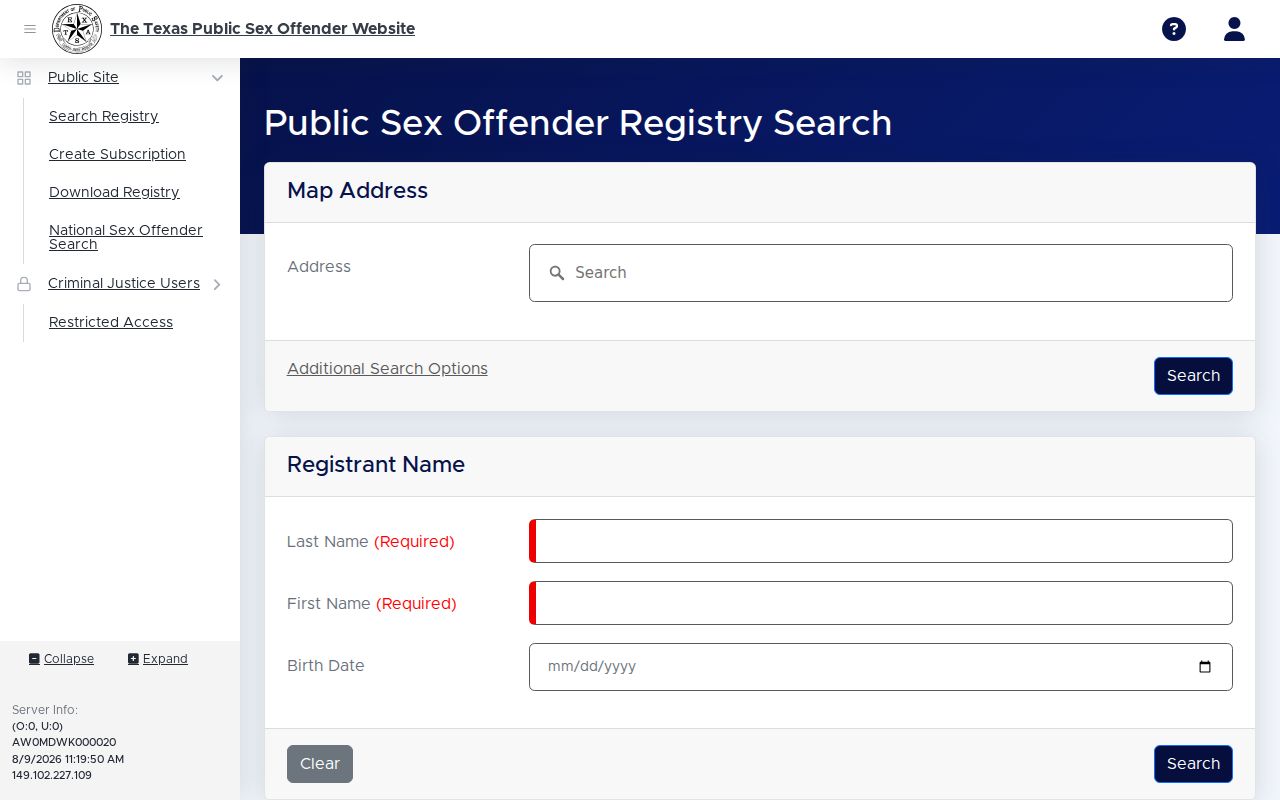
Those controls make it possible to shift from a broad county view to a more focused name or location query without relying on an unofficial list.
Gray County Registry Verification
A registration starts with the local authority for the place where the person lives. The authority receives identifying details, takes or updates the photograph and fingerprints, records the reportable offense, and forwards the data to DPS. It also processes required changes and periodic verification. The statutory schedule can be annual, every 90 days, or every 30 days, depending on the person’s category and status.
Gray County readers should not guess which office owns a record. Check the “registering agency” field first. For a rural Gray County entry, the official Gray County Sheriff page and 806-669-8022 provide the county contact route. For an entry assigned to a city authority, contact that authority instead. Give staff the profile identifier or direct registry URL and describe the field at issue. Do not post a claim online while waiting for verification.
Texas DPS explains how local checks, updates, and notices fit the statewide program. The following image is drawn from the Texas Sex Offender Registration Program overview.
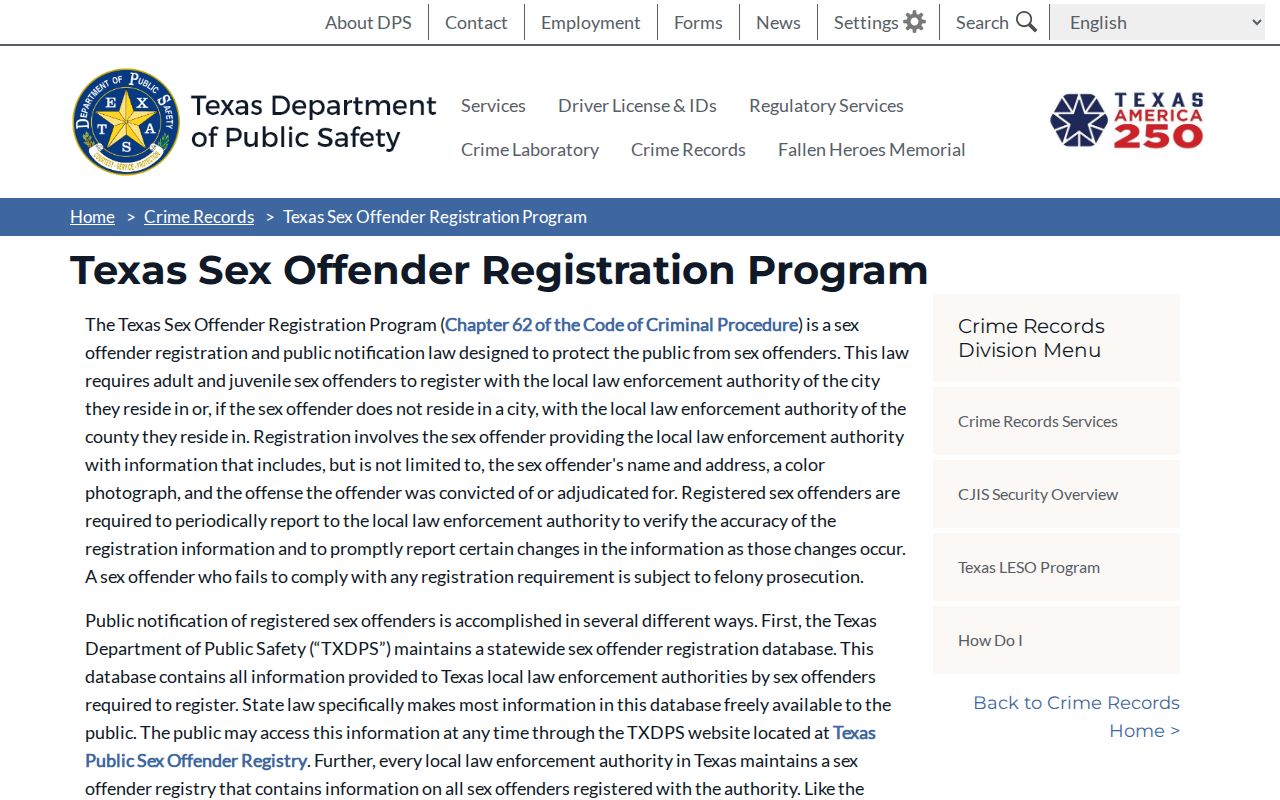
The program page adds context that a search result cannot provide, especially when a reader needs to understand who reports changes and who verifies them.
Note: The registering agency on a Gray County profile controls verification, so a city entry should not be routed to the county by default.
How to Search the Texas Public Sex Offender Registry
Choose the search method that matches the question. A name search is best when the individual is known. A geographic search is better for awareness around a home, route, or community. Read the live disclaimer and complete any CAPTCHA or terms step before treating the results as current public information.
- Open the DPS registry and select a name or geographic search.
- For a place search, enter the address, city, ZIP, or Gray County filter and choose only a radius the portal currently offers.
- Compare the photograph, aliases, birth or age information, physical traits, address type, and registering agency. Never match on a name alone.
- Open the full Gray County registry profile and record its verification status, offense facts, public location, and agency before contacting officials.
| Field or control | Type | When used | Search note |
|---|---|---|---|
| Search type | Tab or choice | Required | Name or geographic/location search |
| Last name | Text | Name search | Use with more details to avoid a false match |
| First name | Text | Optional | Narrows the name results |
| Address | Text | Location search | Sets the street or place basis |
| City or ZIP code | Text or select | Optional | Use Pampa, McLean, Lefors, or a five-digit ZIP |
| County | Select | Optional | Select Gray for a county-wide view |
| Radius | Select | Location search | Use the distances displayed by the live portal |
| Map or list | View control | Optional | Changes how geographic results appear |
Note: A result is a public safety record, not a guarantee that every address field changed at the exact moment a person moved.
Gray County Registry Map and App
The official Texas DPS mobile app adds location, name, route, and proximity mapping. It is a state tool, not a Gray County Sheriff app, and it does not replace the web registry or the registering agency. Route and proximity views can help with travel or neighborhood awareness, but the full profile still supplies the facts needed to identify the correct person.
DPS describes those functions on its mobile application overview.
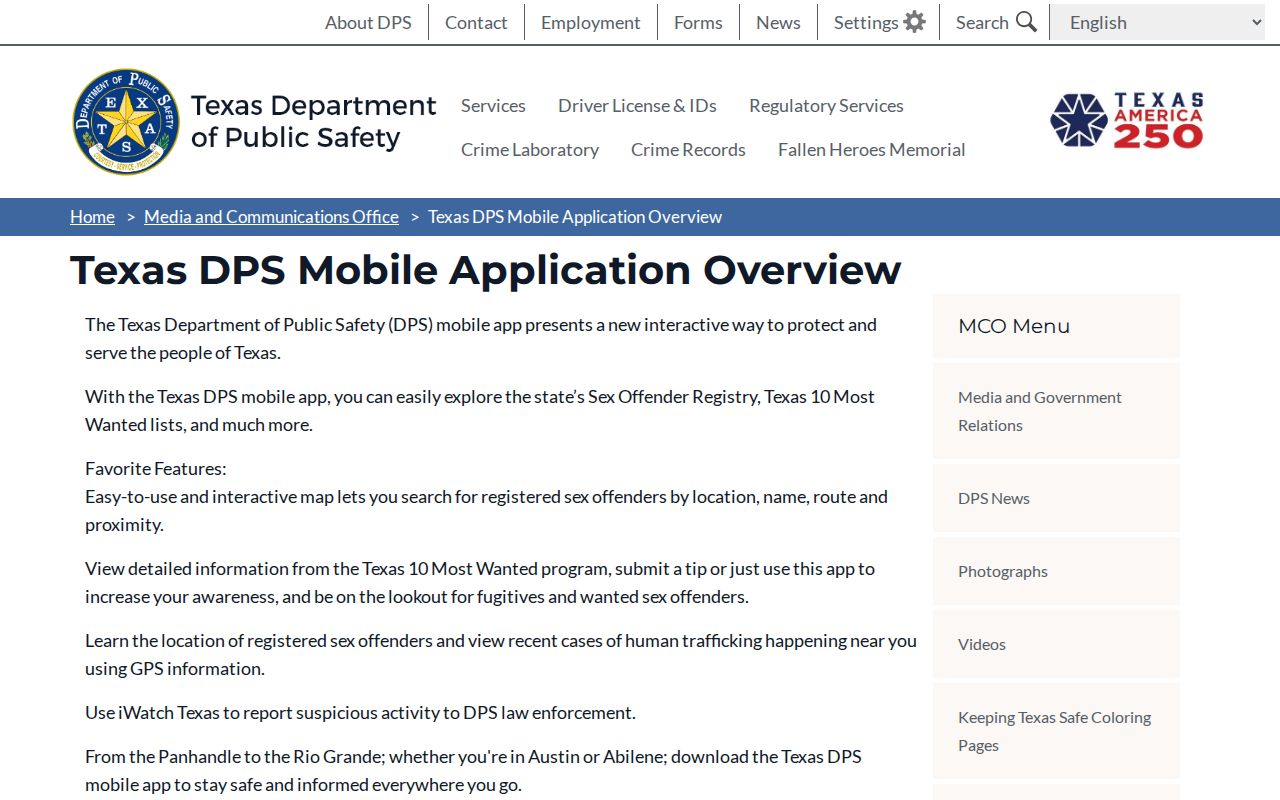
The app is useful for a map-centered question, while the registry website remains the direct source for complete public profile details and the stated registering agency.
Inside a Registry Profile
A Texas profile combines identification, location, registration, and offense information. Some fields are withheld by law. DPS does not publicly disclose Social Security numbers, driver-license numbers, telephone numbers, online identifiers, employer-identifying information, victim identities, or additional data maintained only for agency use. A juvenile court can also order juvenile registration information to remain nonpublic.
| Name and aliases | Public names used to help distinguish the listed person |
|---|---|
| Photo and description | Photograph, sex, race, age or birth date, build, hair, eyes, scars, marks, and tattoos when public |
| Address or location | The public registered residence or location entry and related address type |
| Offense information | Description, statute, conviction or adjudication date, victim age, sentence, and supervision or institutional status |
| Risk and agency | Risk level, registering authority, verification status, and related registration facts |
| Vehicle information | Specified vehicle data when Chapter 62 makes it collected and public |
The Texas registry FAQ explains both public and protected fields. A captured view from the DPS registry FAQ appears below.
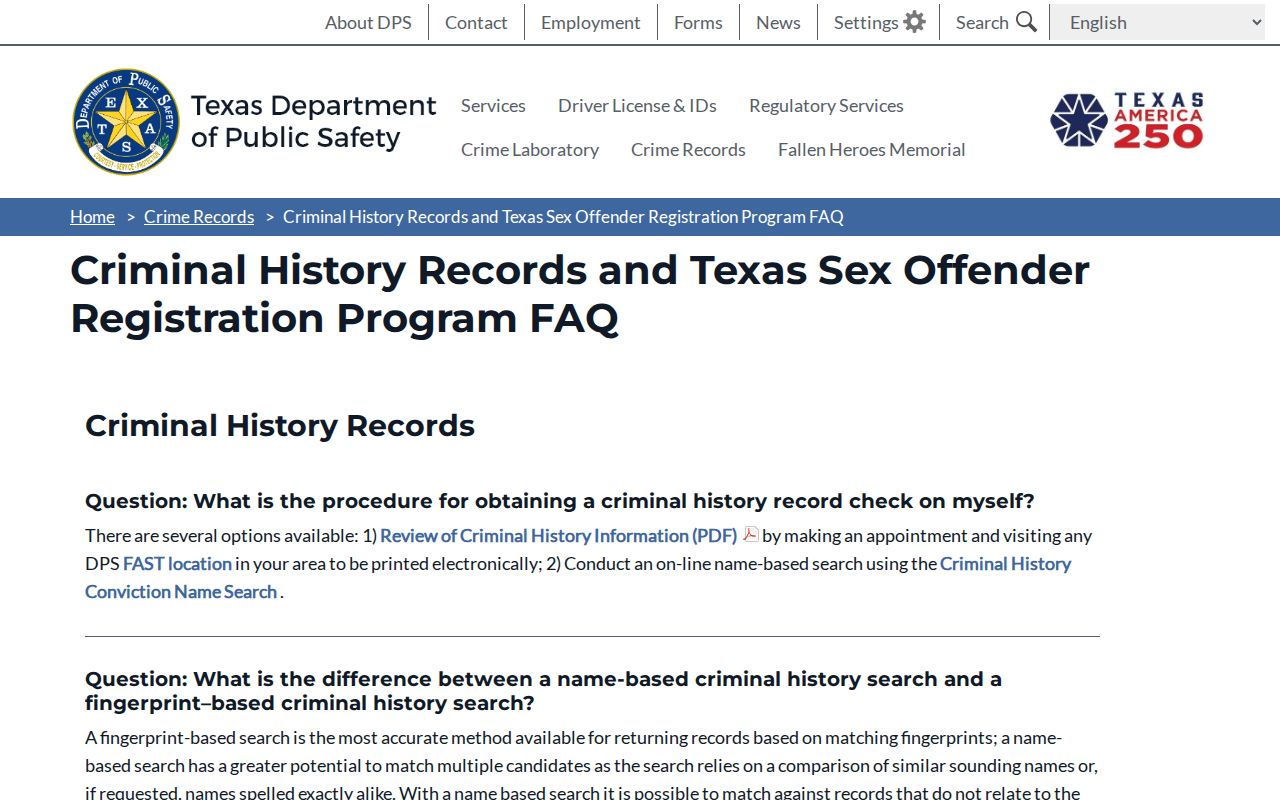
Knowing the protected fields helps prevent a reader from mistaking a lawful omission for an incomplete Gray County profile.
Gray County Registry Residence Rules
Texas DPS states that the statewide registration program does not itself create a single buffer that bars every registrant from living near schools, parks, or other places where children gather. A parole or community-supervision condition can restrict an individual. A valid local ordinance might also impose a rule, but no Gray County ordinance was found in the official research.
That distinction matters. A map pin near a school does not, by itself, prove a violation. Check the profile, identify the supervising or registering agency, and let officials review any applicable condition or law. Public registry data does not reveal every supervision term.
Note: No Gray County residence ordinance was found in the official research, so the statewide FAQ cannot be replaced with a guessed local buffer.
Texas Registration Levels and Requirements
Texas uses low, moderate, and high risk assessments, but those labels are not a simple federal Tier I, II, or III duration chart. The reportable conviction or adjudication under Code of Criminal Procedure Chapter 62 controls the public duty and duration. A profile and the applicable Chapter 62 entry must be checked together.
| Texas measure | Possible duration | Possible verification cycle |
|---|---|---|
| Low, moderate, or high assessment | Does not alone set the term | Does not alone set the cycle |
| Qualifying reportable offense | Ten years after release or supervision, or lifetime, as Chapter 62 directs | Annual, 90-day, or 30-day verification may apply |
| Special status or adjudication | Depends on the statute and record | Depends on the statutory category and status |
Do not infer lifetime registration from “high risk,” or a short term from “low risk.” Those labels describe assessed risk, while the offense and statutory category govern the legal duty.
Gray County Registry and NSOPW
The National Sex Offender Public Website is the better second layer when an address is close to a county or state boundary, or when the person may have moved outside Texas. The U.S. Department of Justice tool searches participating states, tribes, and territories. It does not correct Texas data or replace local verification.
The national interface can broaden a Gray County check beyond one state. The image below comes from the official NSOPW search.
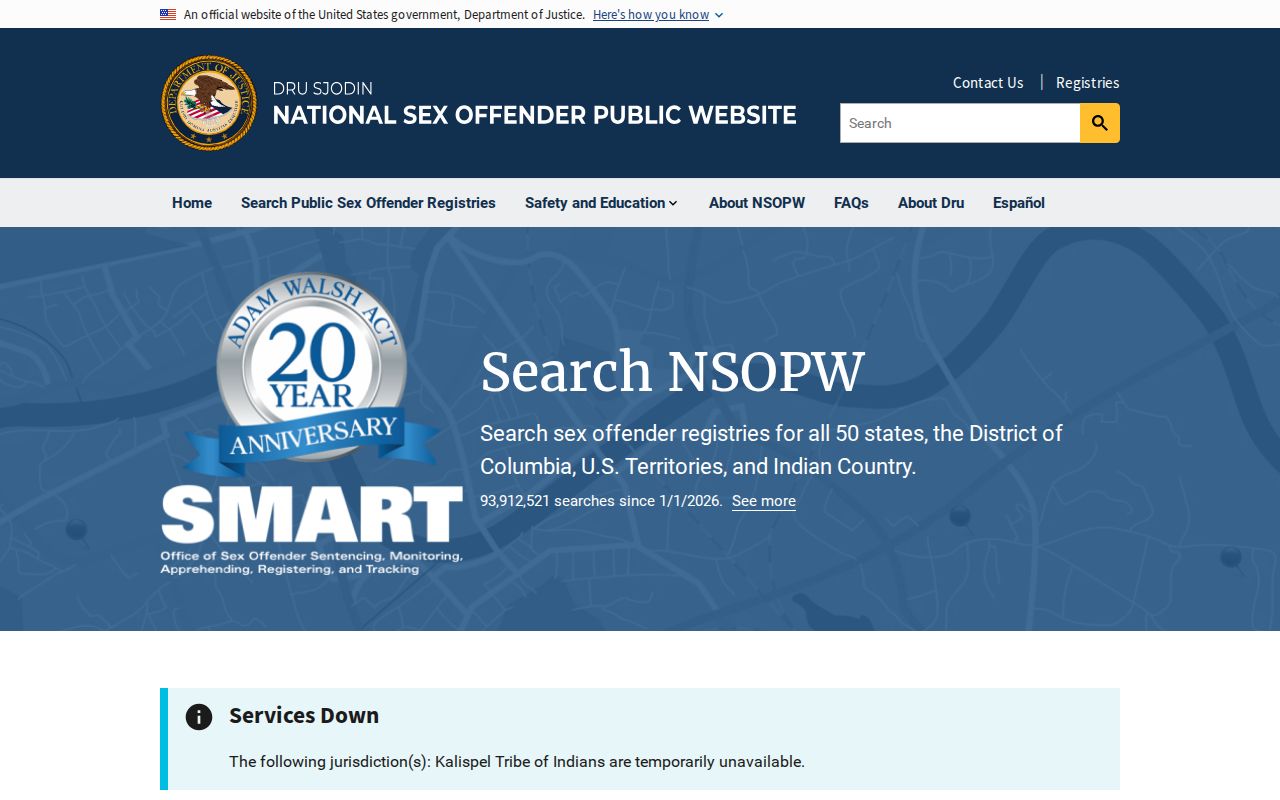
If the national and Texas entries differ, report the issue to the registering agency shown by Texas DPS. NSOPW federates records; it does not own the Gray County registration file.
Report Gray County Registry Concerns
Suspected noncompliance belongs with law enforcement. Save the profile identifier, note the exact field or location that appears wrong, and contact the registering agency. Use the Gray County Sheriff for a rural county registration. Contact the city authority listed on the profile for a city registration. Emergencies go to 911.
DPS can mail community postcards when a high-risk registrant or a civilly committed sexually violent predator moves into a community. That notice is different from an app map, a routine verification date, or an unofficial neighborhood post. It is part of the formal Texas notification process.
Do not approach the person, family, household, or property. Direct reporting protects both the integrity of the Gray County registry record and the safety of everyone involved.
Note: Save the public profile identifier and report the specific concern privately rather than circulating an unverified claim through the community.
Community Notification and Lawful Use
Registry information exists for community awareness and practical safety planning. It can help a family understand a nearby public listing, check a route, or identify the right agency for a concern. It should be used with careful identity matching and attention to the profile’s date and status.
Registry misuse can be a crime: Texas Code of Criminal Procedure Chapter 62 does not authorize threats, harassment, injury, vigilantism, or other criminal acts against a registrant or the registrant’s family. Verify identity, avoid confrontation, and report suspected violations to the listed agency or the Gray County Sheriff.
A Gray County registry entry reports a legal registration status. It does not grant permission to punish or target anyone. When facts appear wrong, the proper response is a private report to the office that can investigate and update the official record.