
Gray County Criminal Court Cases
Jurisdiction decides where a Gray County case file lives. The 31st and 223rd District Courts hear felony matters and other district-level work. Their criminal files route through the District Clerk. The constitutional Gray County Court handles county-level jurisdiction, which ordinarily includes Class A and B misdemeanors, through the County Clerk. Justice courts handle precinct-level fine-only matters. Pampa, Lefors, and McLean municipal courts keep their own city ordinance and Class C dockets when the matter is within municipal jurisdiction.
A county-level search therefore cannot be assumed to include every Gray County criminal citation. The clerk is more than a search contact. That office maintains the official case number, filings, event history, orders, and judgment for its court. A police report or jail entry may point toward a case, but neither replaces the clerk's filed record. Start with the alleged offense level and place of filing. If those are unknown, use the arrest paperwork, citation, warrant number, or booking data to identify the issuing court.
Gray County Felony Records Counter
The Gray County District Clerk is the primary custodian for Gray County felony case files. The office is at 205 N. Russell, Room 300, Pampa, and its published phone is 806-669-8010. Give staff the defendant's recorded name, a close filing year, the court if known, and the case number when available. State whether the request is for a docket sheet, a particular order, or a certified disposition. Gray County has not published stable copy, certification, or search fees in the researched sources, so ask for the current price before ordering.
The official clerk page shows the local route to the criminal records counter.
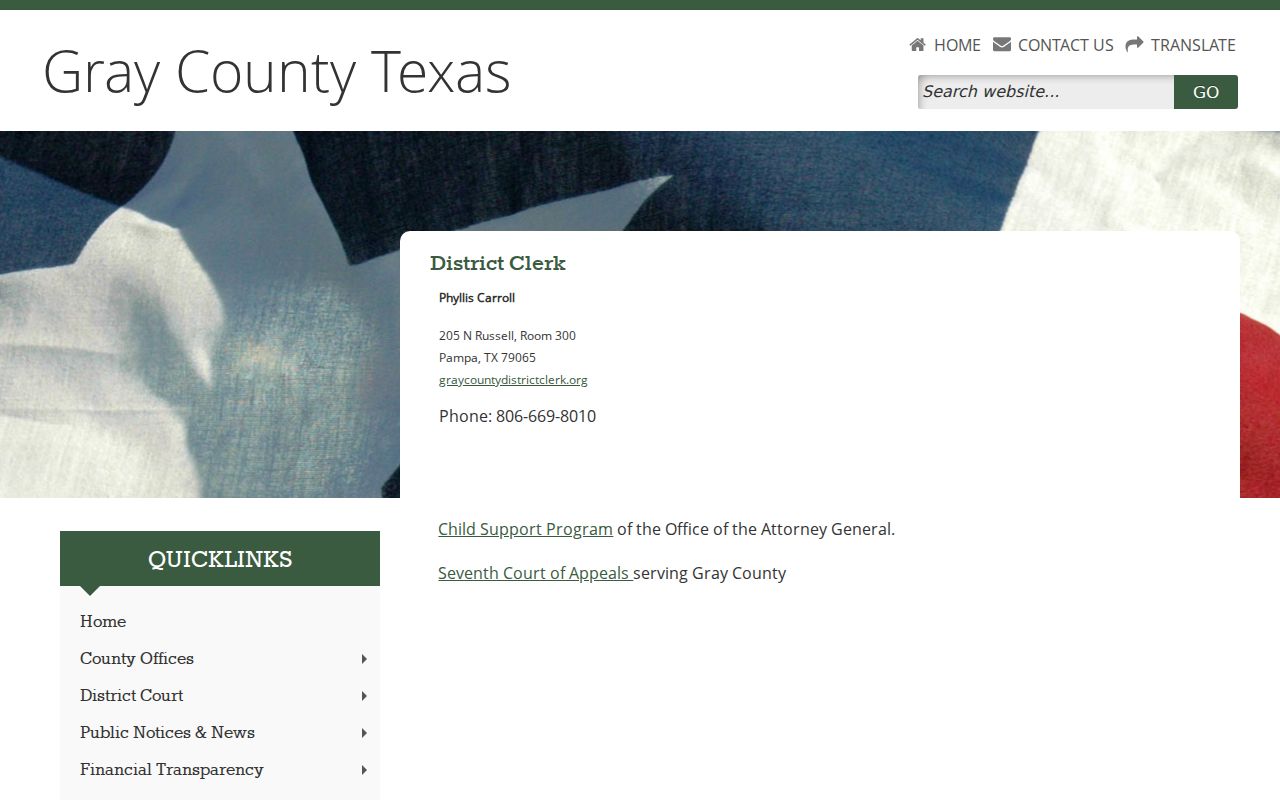
That counter is the place to confirm a felony docket when an online entry is absent, abbreviated, or not current.
Searching Gray County Case Records
re:SearchTX is Texas's statewide trial-court search. It uses an eFileTexas account for sign-in. Coverage and public document access depend on what each clerk contributes, so a blank result is not a no-record certificate. Use the portal to find a possible Gray County case number and court, then contact that clerk for a missing filing, the latest register of actions, or a certified judgment.
- Choose the Cases category, or use Filings, Text in Documents, or Hearings when the question calls for that record.
- Enter the defendant name or known case number, then apply the Gray County jurisdiction filter.
- Narrow the results by court, case type, status, filing date, or other filters the current record permits.
- Open Case Details and inspect the docket, parties, filings, hearing entries, and recorded status.
- Call or visit the correct Gray County clerk to order a public document or certified disposition.
| Portal Control | Type | Use | Result |
|---|---|---|---|
| Search category | Tabs or cards | Required | Cases, Filings, Text in Documents, or Hearings |
| Search | Text | Required | Keyword submitted by Enter key or search icon |
| Filters | Panel | Optional | County, court, case type, status, date, and record-based choices |
| Case description | Result link | As available | Opens Case Details |
| Filing or hearing | Result link | As available | Opens filing details, a permitted document, or hearing dialog |
| Export or save | Button | Optional | Exports results or saves the query to an account |
Two Gray County Felony Courts
The Gray County district court directory identifies two district trial courts, but the court named on the record matters. Do not treat “district court” as a complete case citation. Record the Gray County case number and whether the header says 31st or 223rd. That detail helps the clerk locate the file and lets the reader distinguish events when the same name appears in more than one Gray County criminal case.
The county directory depicts the local district-court structure that sits behind felony dockets.

The shared clerk route does not erase the identity of the trial court shown on each judgment and docket.
The 31st District Court page provides one official branch of that structure.
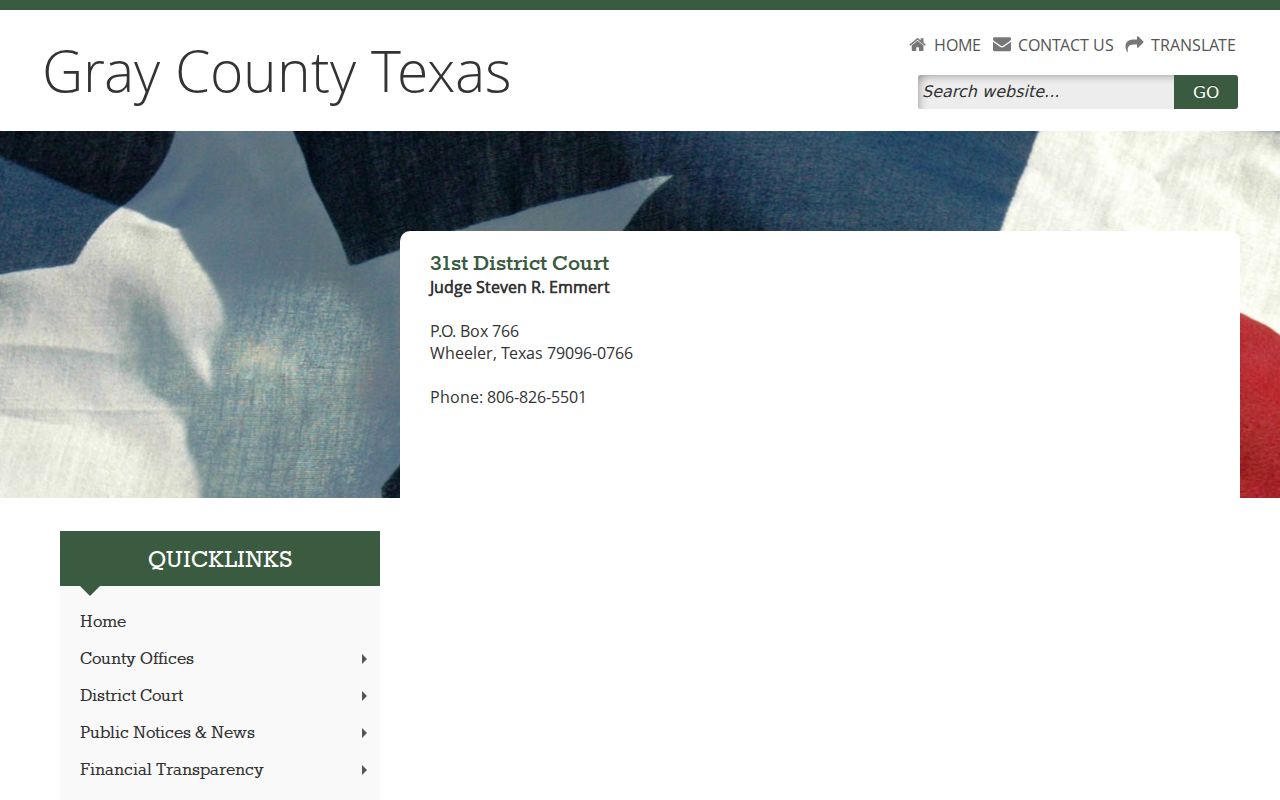
Its page helps confirm the court named in a felony case header, rather than merely confirming that a district case exists.
Inside a Gray County Case File
A Gray County court file centers on prosecution, not jail intake. Its header identifies the court, judge, case number, filing date, type, and status. Party fields name the State, defendant, and counsel. Charge entries may show the offense description, statute, class or level, count, and offense date. Docket lines record filings and settings. The full public file may contain a complaint, information, indictment, motions, notices, orders, plea papers, judgment, and sentence. Availability varies because some documents are redacted, restricted, or not posted online.
| Case Number and Court | Identifies the file and the Gray County tribunal that owns it. |
|---|---|
| Charging Document | Shows the complaint, information, or indictment and the charge actually filed. |
| Docket Entries | Provide a dated chronology of settings, filings, pleas, orders, judgment, and sentence events. |
| Hearing Dates | List scheduled event dates and types, subject to later resets or changes. |
| Disposition and Judgment | Record the outcome of each count and the signed court action. |
| Sentence and Conditions | State confinement, community supervision, fines, costs, restitution, and related terms when imposed. |
A docket label is not the document itself. “Motion filed” does not disclose the motion's substance, and a hearing setting does not prove that the hearing occurred. Ask the clerk for the referenced document when its content matters.
Gray County Lower Court Records
The Gray County Clerk is the official county-level route for misdemeanor files held by the constitutional county court. Its page is a distinct source from the District Clerk because a Class A or B misdemeanor does not become a district file merely because the event occurred in Gray County. Ask for the current office number and copy terms from the live directory if they are not stated on the citation.
The county clerk page illustrates the separate custodian for these criminal records.
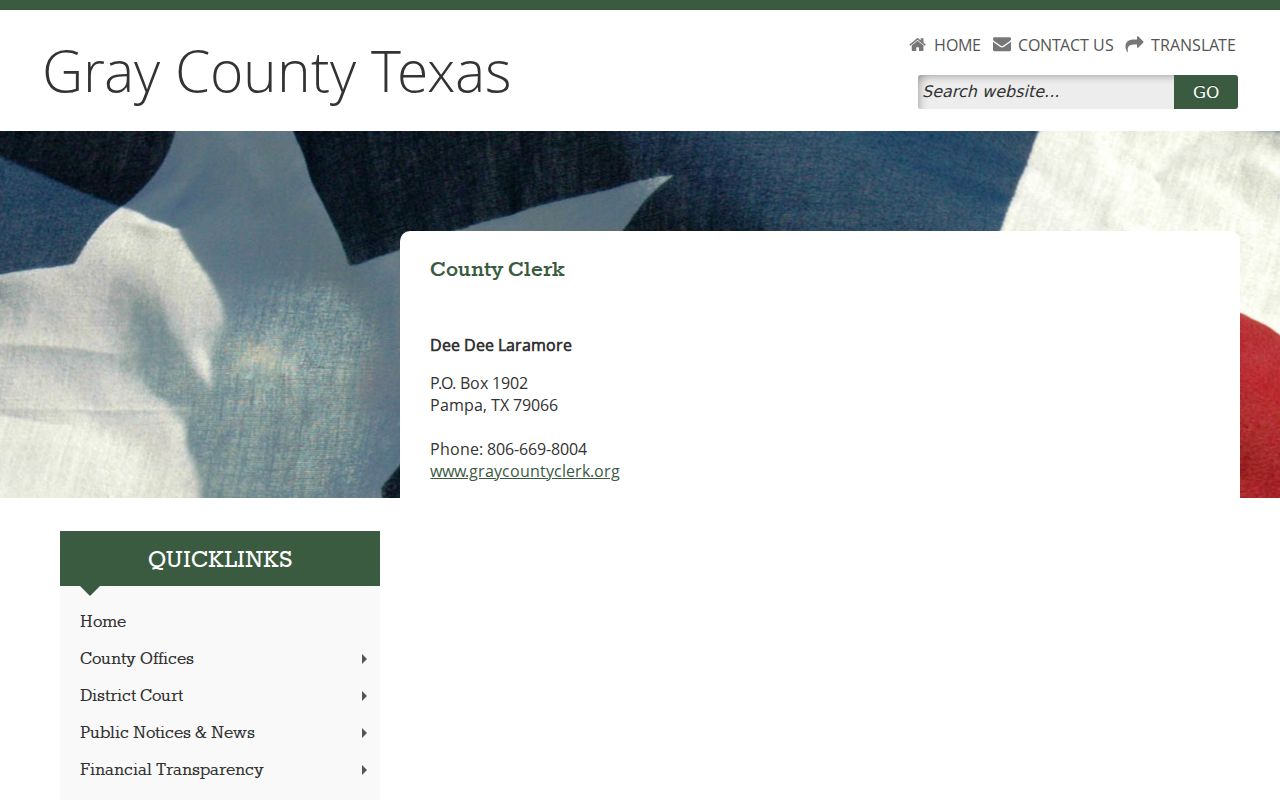
Keeping felony and misdemeanor counters distinct prevents a false no-result from the wrong office.
Fine-only cases add another local layer. Justice courts keep precinct matters, while municipal clerks keep city ordinance and Class C records. JP Precincts 2 and 4 publish a Room 100 counter and 806-669-8015; their posted schedule closes Friday. Pampa, Lefors, and McLean municipal matters may never appear as district cases. Contact the court named on the ticket or process before assuming re:SearchTX has the whole Gray County file.
How a Criminal Case Moves
A person jailed in Gray County must be brought before a magistrate without unnecessary delay, generally no later than 48 hours under Texas Code of Criminal Procedure article 15.17. Magistration supplies warnings and addresses bond, but it is not a conviction. The prosecutor later decides whether and how to file. Many misdemeanors proceed by information. A felony may be presented to a grand jury for indictment. Pretrial motions, discovery, settings, a plea or trial, and the final Gray County judgment then create distinct docket events.
Case flow: Charges Filed › Arraignment › Pretrial › Plea or Trial › Disposition › Sentencing
A later motion, appeal, or corrected order may add to the Gray County record. “Dismissed” means prosecution ended on that count without conviction. “Acquitted” follows a not-guilty outcome. A no-bill means the grand jury did not return an indictment on the charge. Deferred adjudication postpones a final finding while community supervision is imposed and can remain public through DPS unless nondisclosure applies.
Certify a Gray County Outcome
A portal screen can orient a Gray County search, but it may not satisfy an official correction process. Obtain the signed judgment, dismissal, or other disposition from the clerk that owns the Gray County criminal case. Ask for certification when the record will be submitted to Texas DPS Error Resolution. DPS directs a person correcting their own Texas record to use a certified disposition and warns that an ordinary photocopy from a private source may be insufficient.
The 223rd District Court page is an official way to verify the second district court's local identity.
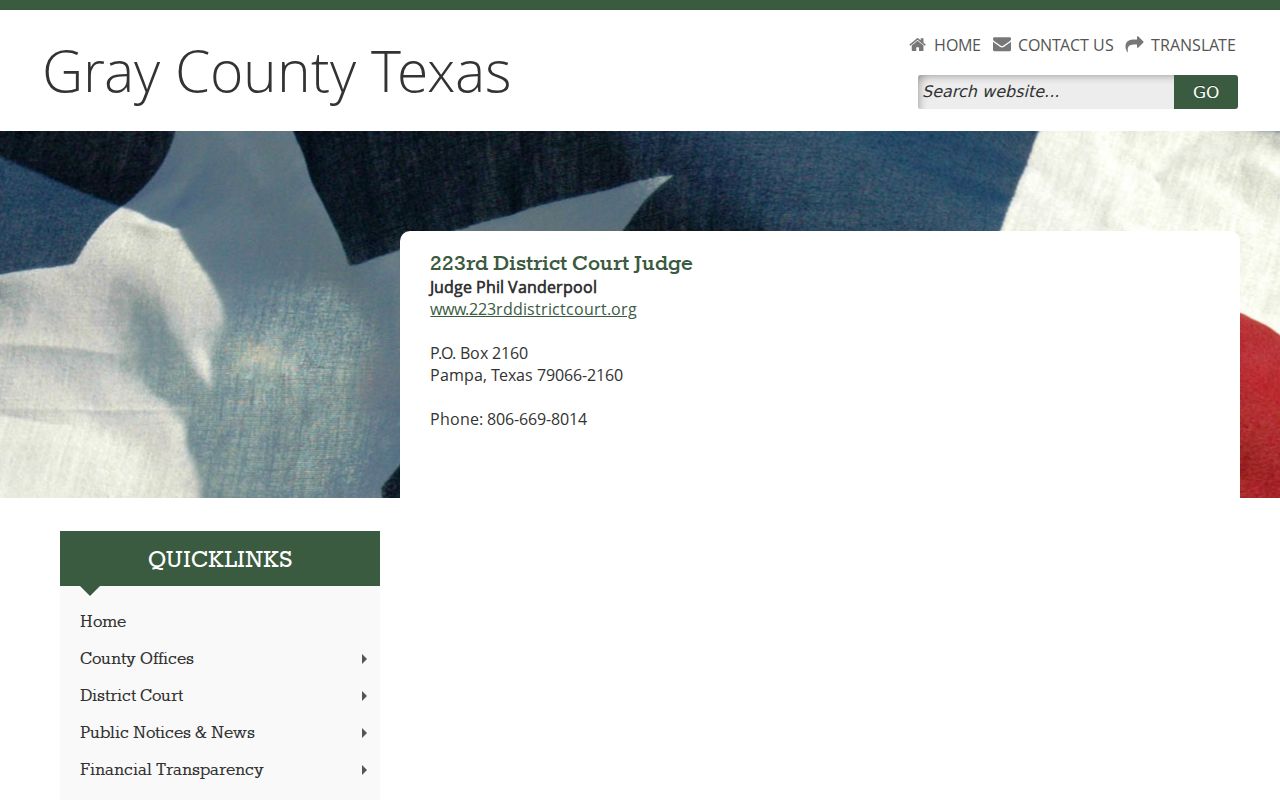
Match the certification request to the court shown on the docket so the resulting copy traces to the correct Gray County file.
For a current Gray County case, ask for the newest register of actions and whether the court has entered a signed outcome. Keep the case number, court, certification date, and the clerk's receipt with the copy. Those details help distinguish a final order from an old portal status or a docket entry that only notes a filing.
Case Record Access & Restrictions
Gray County court records are generally accessible under the judicial access framework, but access is record-specific. Juvenile material, victim and minor identifiers, Social Security numbers, confidential exhibits, and sealed, expunged, or nondisclosed information may be withheld or redacted. Some public documents may be available only by inspection or copy rather than through re:SearchTX. Grand-jury deliberations remain secret even when a filed indictment is part of a public case.
The Texas Public Information Act governs public information held by agencies, while Gray County court records also follow judicial rules and record-specific law. Write a narrow request that identifies the court, case number, document, and date range. If an office withholds agency material, ask which exception applies and whether an Attorney General ruling is being sought. For a court file, ask the clerk about inspection, redaction, and copy access under the rules that govern that court.
Note: A missing online document may still be public at the Gray County clerk's counter or available as a paid copy.
Read Gray County Case Status
Read the Gray County judgment before reducing a Gray County criminal case to one status word. Pending means no final outcome is recorded yet. It predicts neither guilt nor the next event. A dismissal does not mean an acquittal, and neither term automatically removes the historical arrest or docket. A conviction should be checked count by count for the offense level, sentence, jail credit, and whether multiple terms run together or one after another.
Bonds and warrants also need context. A bond entry shows security or conditions tied to appearance; it does not resolve the charge. A capias is court process commanding arrest, while a capias pro fine concerns post-judgment enforcement of an unpaid fine. When a status looks stale, call the issuing Gray County clerk and ask for the last docket sheet plus any signed judgment, dismissal, transfer order, or warrant-clearance entry.
The broader Gray County criminal history overview explains how the clerk record differs from jail custody and the statewide DPS public product.